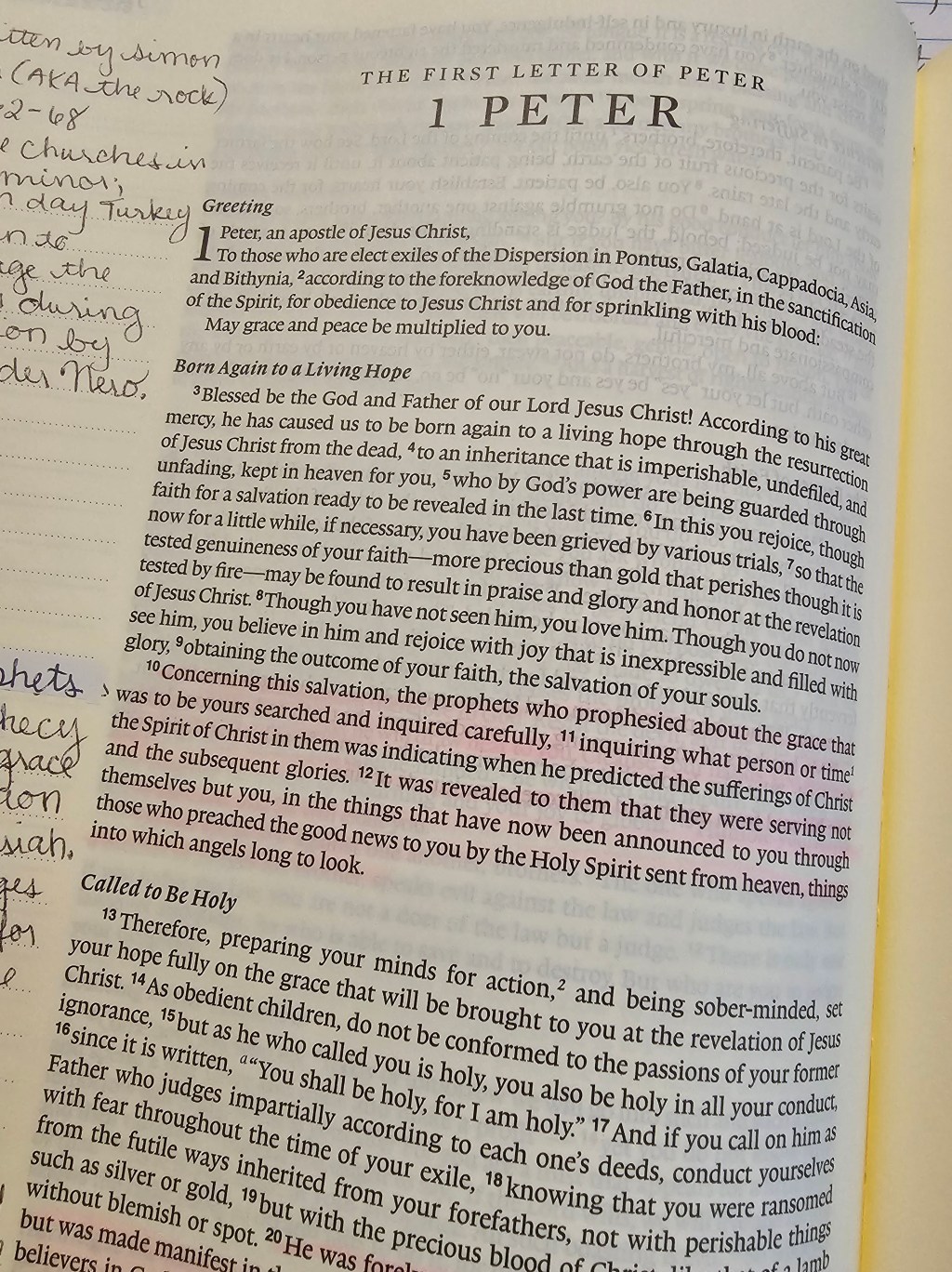
For the last few months, I’ve been reading the book “How to Read the Bible for All its Worth” by Gordon D. Fee and Douglas Stuart, with another couple from church. Previously, I’d been reading through the Bible chronologically with the Bible Recap, and I’d just finished. I was ready to dig deeper into the Word. Therefore, as soon as I finished the first chapter of “How to Read…” on the Epistles, I immediately went to work on reading/studying some of the shorter Epistles, using the knowledge I’d acquired.
The book of Jude is a super short letter, written by Jesus’s half-brother, and Jame’s brother, Jude. It’s believed to have been written to Jewish Christians in Palestine.
Jude begins his letter by saying that his original intention was to write to them about their “common salvation,” the salvation they share in Christ, but there seems to be another issue in the church worth addressing (verse 3). People have apparently snuck into their church/group declaring, much like today, that God’s grace allows them to live as they please, and by doing so, they deny Jesus Christ as Lord and Savior (v. 4).
Jude uses examples from Israel’s history to prove that God will judge and destroy those who live immoral lives, defy authority, and mock God (vv. 5-11). And those “believers” who choose to live as they please, rather than how God would have them live, sin against God, and slander His character. They condemn themselves by their actions (Titus 1:16).
In verses 12-13, Jude calls them blemishes/stains, fruitless/dead, and without the Spirit; wild waves (destructive & lacking moral restraint); wandering stars doomed forever to blackest darkness (hell). They grumble and complain, follow their own desires, and are braggarts and flatterers (v. 16).
But then Jude goes on to describe the true believer’s response, which is to be aware of such people because they’ll be the cause of division within the church. They don’t follow the Spirit; they follow their emotions and natural inclinations (vv. 17-19). He says, “But you, dear friends, build yourselves up in your most holy faith and pray in the Holy Spirit” (v. 20). True believers must keep in step with the Spirit (Galatians 5:25), strengthen each other in the faith, and have mercy on those who doubt. In other words, pray for those within the church who are not living lives of obedience, help them understand, and teach them. Jude says, show them mercy, but do so with caution–lest we be affected.
As I finished up the book of Jude, it reminded me of the passages in Matthew 13:24-30, 36-43, when Jesus talks about a farmer who sowed his field with good seed. But during the night, an enemy came and sowed weeds among the rows. As the seeds began to sprout, the farmer’s servants asked if they should pull up the weeds, but the farmer told them “no” because they would also pull up the good crops.
While Jesus was talking about the Kingdom of God, His coming return, and judgment in this parable, we can unfortunately see similarity within the church. There are so many who claim to know Christ, but whose lives show otherwise. Like the weeds sown between the rows, they grow beside us, even within the church, causing dissension and blaspheming the Lord with their actions. We don’t always know who is who; only God knows! We’re not told to weed them out, but rather to pray for others, teach, and encourage them to do what’s right and to live lives reflective of God’s character. Iron sharpens iron my brothers and sisters (Proverbs 27:17)!
If you don’t know where you stand on this matter, ask yourself, “Does my life reflect God’s heart and character? Am I living for Him, or am I living for myself? Am I living a life that is holy and set apart for His good works? Am I making decisions based on my emotions, complaining, gossiping, and/or causing division within the church? Or am I seeing and meeting the needs of others?”
Open our eyes, God! Help us to see where we stand with you, where our attitudes need adjusting; and may our hearts be broken before You in humility, surrender, and obedience.

 brokenredeemed
Leave a comment